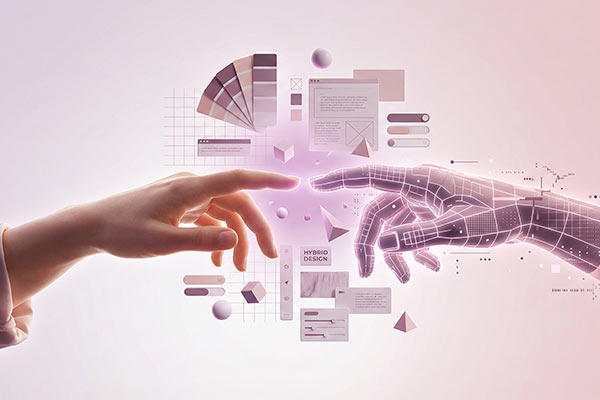
From Designer to Visual Director: How AI Has Redefined the Creative Role
From Designer to Visual Director: How AI Has Redefined the Creative Role
Before AI, the designer’s role was simple:
execute the idea, refine it, deliver the final output.
Today, execution is no longer the core of the job.
The designer has evolved into a Visual Director a leader guiding an entire creative ecosystem, not just tools.
AI did not replace the designer…
It expanded the designer’s role.
1. Designers Don’t “Execute” Anymore… They Direct
Traditionally, designers handled:
– drawing
– production
– full visual execution
Now they must:
– choose the concept
– set the style
– write strong prompts
– direct the AI model
– evaluate results
– correct the direction
– build a cohesive visual system
The designer is the mind, not the hand.
2. Next-Gen Tools Need a Conductor, Not a User
Modern tools don’t run themselves.
They wait for direction:
– What to create?
– How to create it?
– For which audience?
– With what mood?
– Within which identity?
Today’s designer is more like a conductor,
each AI tool a musical instrument waiting for guidance.
3. Speed Is No Longer an Advantage… It’s the Baseline
Producing work in a week used to be impressive.
Now designers must:
– generate dozens of directions in hours
– filter results quickly
– evolve visual identity rapidly
– build full systems in short timeframes
If you can’t match the speed,
you can’t match the market.
4. AI Doesn’t Have “Vision”
AI can generate beautiful images —
but it doesn’t know:
– why a concept works
– how it affects an audience
– whether it fits the brand
– how it evolves into a system
Creative vision cannot be generated.
It must be interpreted by a designer.
5. The New Designer Builds “Worlds,” Not Images
Designers no longer create single visuals.
They build:
– systems
– moods
– stories
– atmospheres
– emotional experiences
The visual director is the one who assembles all these components
into a complete creative world.
Conclusion
AI did not reduce the designer’s role it elevated it.
From execution to direction,
from operating tools to orchestrating them.
The future belongs to those who understand the idea,
not merely those who draw it.