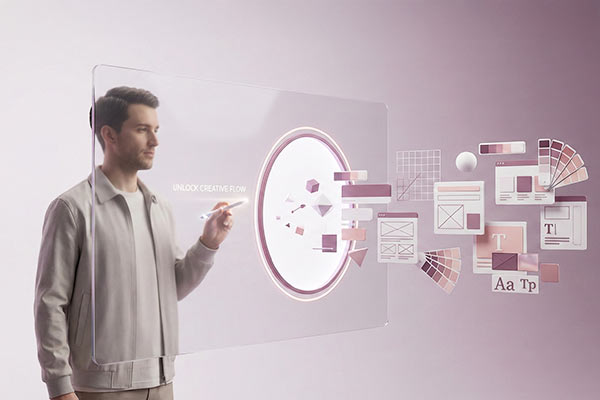
Why Designers Must Understand Prompt Engineering
Why Designers Must Understand Prompt Engineering
In the age of artificial intelligence, the decisive factor is no longer the tool itself…
It is the language used to communicate with the tool.
This language is called:
Prompt Engineering —
and it is not just typing instructions.
It is a complete creative-thinking framework.
1. AI Doesn’t “Understand”… It “Receives”
AI tools do not inherently comprehend context.
They simply respond to the clarity and precision of the prompt.
A designer who cannot articulate what they want
will constantly receive random, unusable, repetitive outputs.
But a designer skilled in prompt crafting
can produce entire visual worlds in minutes.
The prompt is the mind.
The tool is only the hand.
2. Full Control Over Every Visual Detail
A well-engineered prompt gives the designer control over:
-
lighting
-
angles
-
materials
-
visual mood
-
color identity
-
proportions
-
style
These controls are no longer exclusive to photographers or production teams —
they are now part of the designer’s own skillset.
3. Anyone Can Generate a Pretty Image… Few Can Create Identity
AI has made beautiful visuals easy to produce.
But beauty alone is not differentiation.
True creative identity comes from:
-
precision
-
clarity of vision
-
depth of description
-
crafting a personal “prompt language”
-
understanding how words influence output
This is where real design skill emerges.
4. Prompt Engineering Is the Bridge Between Creativity and Strategy
Ideas alone are no longer enough.
Manual execution is no longer the benchmark of talent.
Today, talent is measured by:
-
the ability to translate ideas into AI-readable language
-
the ability to direct the model
-
the ability to refine and filter results
-
the ability to achieve identity, not just imagery
In other words:
the designer becomes a visual director, not just a producer.
5. Designers Who Lack Prompt Skills Will Get Stuck at the Idea Stage
AI is fast and powerful.
If a designer cannot lead it effectively,
they will fall behind those who can communicate more clearly and strategically.
The new difference between designers is no longer the software they use —
but their ability to turn ideas into executable visual language.
Conclusion
Prompt Engineering has become a fundamental part of the modern designer’s identity.
It is not a technical skill alone it is a strategic skill that defines speed, quality, and creative differentiation.
Those who cannot master the language of prompts cannot lead the tools of the future.